


The Basics of Coil Winding Machine and How It Works in Modern Manufacturing
Coil winding is one of the most fundamental processes in electrical and electronic manufacturing. From inductors and transformers to motors and EMI filters, nearly every electromagnetic component relies on precisely wound coils to function correctly.
A Coil Winding Machine is designed to automate this process, ensuring consistent wire placement, controlled tension, and repeatable coil geometry. While the concept may appear simple, the actual winding process involves multiple controlled parameters that directly affect electrical performance and product reliability.
What Is Coil Winding?
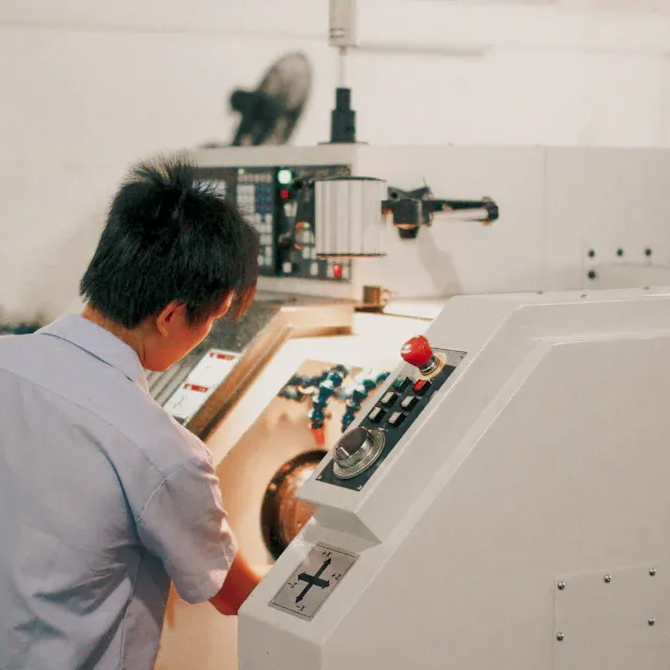
Coil winding refers to the process of wrapping conductive wire around a core, bobbin, or mandrel in a controlled spiral pattern. The resulting coil generates a magnetic field when electrical current passes through it.
Depending on the application, coils can be single-layer, multi-layer, tightly packed, or specially shaped for different inductance and magnetic performance requirements.
Why Coil Winding Quality Matters
In modern electronics, even minor variations in coil structure can lead to significant performance differences. Key electrical parameters such as inductance, resistance, and EMI suppression are directly influenced by winding accuracy.
| Winding Factor | Impact on Performance |
|---|---|
| Wire tension stability | Affects coil uniformity and durability |
| Winding pitch accuracy | Determines inductance consistency |
| Layer alignment | Impacts magnetic efficiency |
| Turn count precision | Controls electrical output stability |
How a Coil Winding Machine Works
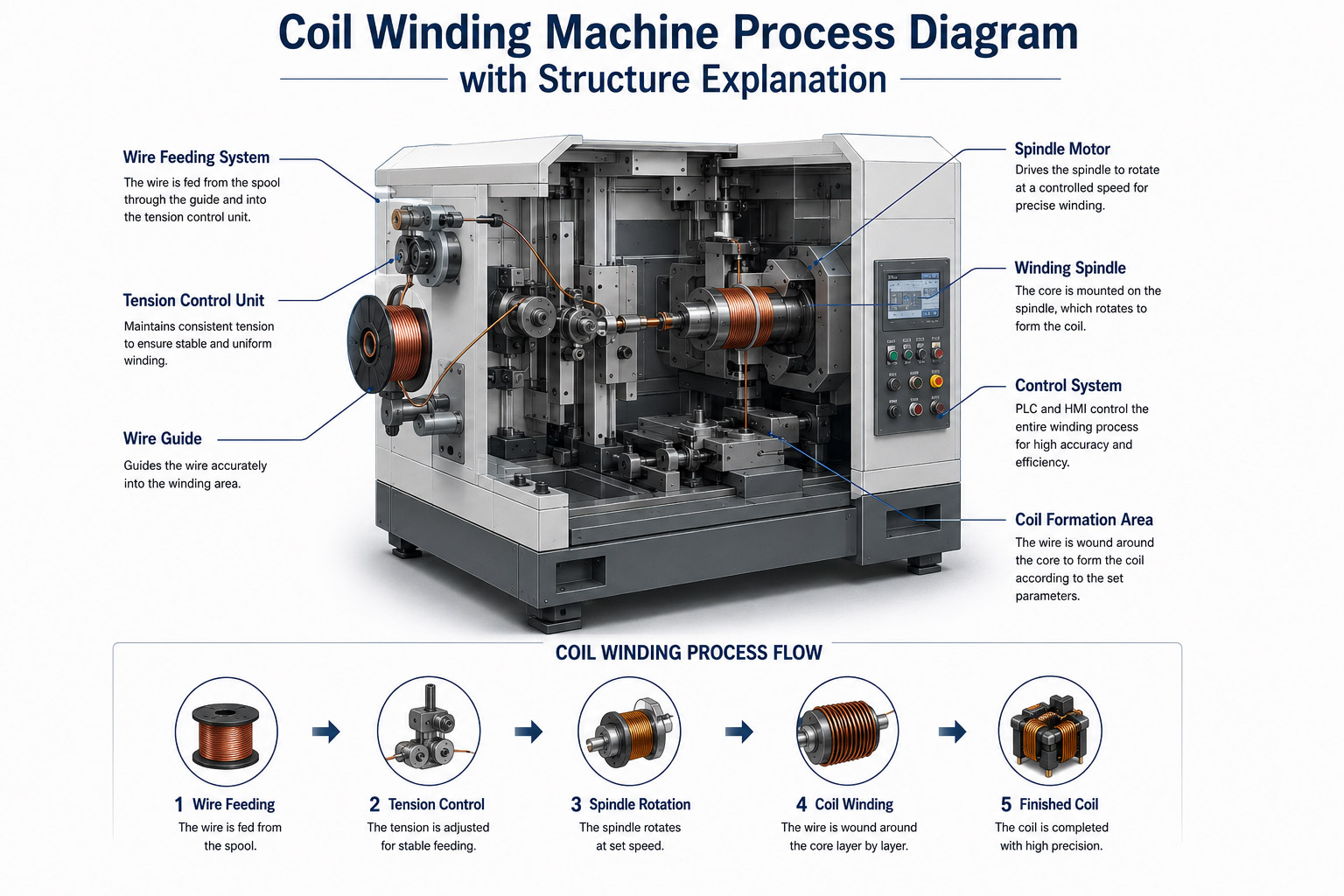
A coil winding machine automates the process of wire winding through a synchronized mechanical and electronic control system. Although designs vary, the working principle is generally the same.
1. Wire Feeding System
The wire is supplied from a spool and guided through a tension control system. This ensures the wire enters the winding zone with stable force and prevents deformation or breakage.
2. Tension Control Unit
Tension control is one of the most critical parts of the process. It ensures that every turn of wire is applied with consistent force, avoiding loose winding or excessive tightening.
3. Spindle Rotation System
The core or bobbin is mounted on a spindle that rotates at controlled speed. The rotation determines winding speed and directly affects production efficiency.
4. Traversing Mechanism
A guiding system moves the wire horizontally to ensure even layering across the coil surface. This is essential for multi-layer coil structures.
5. Programmable Control System
Modern machines use CNC or PLC control systems to define parameters such as turns, speed, pitch, and layer arrangement, enabling fully automated and repeatable production.
Types of Coil Winding Machines
Different applications require different winding technologies. In industrial manufacturing, machines are often categorized based on coil structure and production requirements.
Automatic Coil Winding Machine – Used for high-volume production with programmable control
Inductor Winding Machine – Designed for EMI filters and magnetic components
Transformer Winding Machine – Used for power and voltage transformation coils
Specialized Winding Systems – Customized for complex coil structures
Industrial Applications of Coil Winding Technology
Coil winding machines are widely used in industries that require precise electromagnetic components.
EV charging systems
Solar inverter manufacturing
Telecommunication equipment
Power supply systems
Industrial automation
Consumer electronics
Why Automation Is Replacing Manual Winding
Traditional manual winding methods are no longer suitable for modern production requirements. Variations in human operation often lead to inconsistent coil quality and low production efficiency.
Automated coil winding machines provide higher accuracy, faster production speed, and improved repeatability, making them essential in large-scale manufacturing environments.
Conclusion
The coil winding machine is not just a production tool—it is a precision system that directly affects the performance of inductors, transformers, and other electromagnetic components.
Understanding how coil winding works helps manufacturers improve product quality, reduce defects, and achieve stable mass production in modern industrial environments.
