
2026-07-10 13:43:51
In today's electronics manufacturing industry, product quality depends not only on high-performance materials but also on the precision of the manufacturing process. For components such as common mode chokes, inductors, transformers, and other electromagnetic coils, even small variations in winding accuracy can affect electrical performance, EMI suppression, and long-term reliability.
A Fully Automatic Coiling Machine is designed to eliminate these inconsistencies through intelligent automation. However, achieving consistent coil quality requires more than simply starting the machine. Proper machine setup, parameter optimization, and regular verification are essential for maintaining stable production and reducing defect rates.
This article explains the key parameters that influence winding quality and how manufacturers can optimize their production process for better coil performance.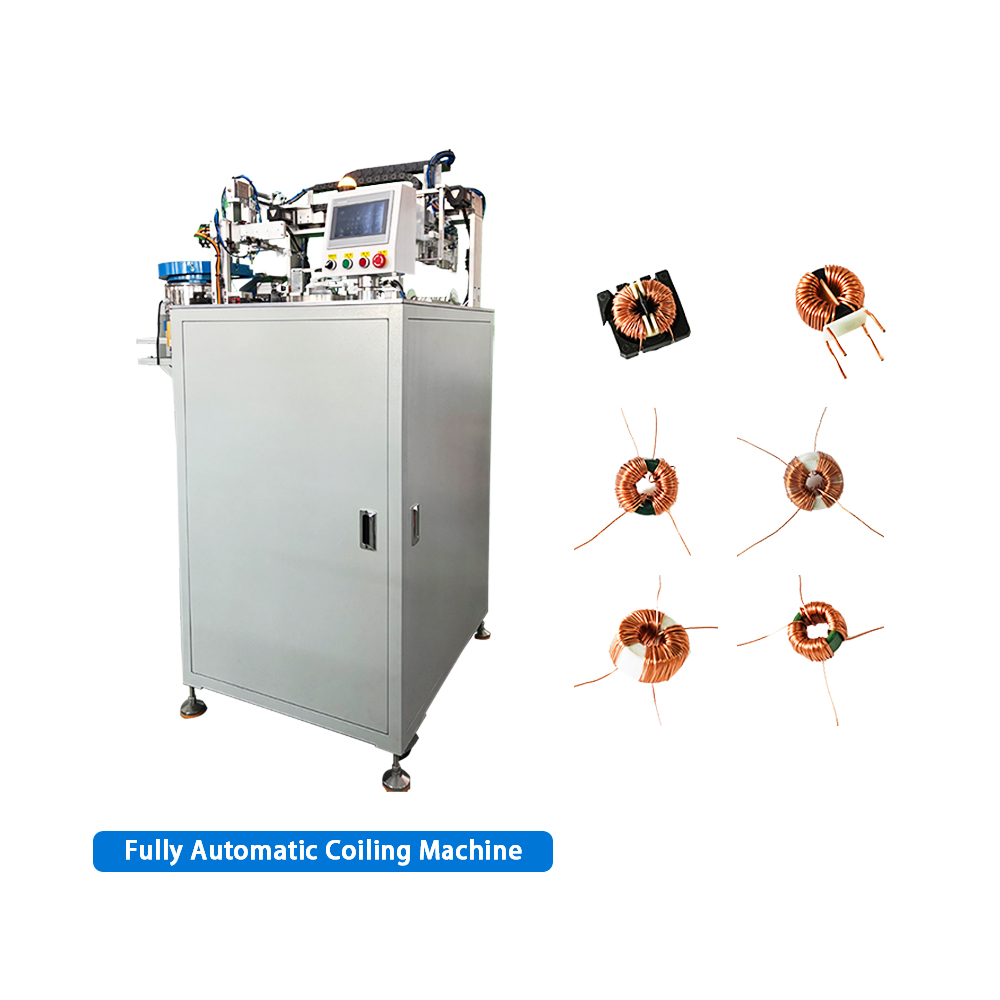
Modern Fully Automatic Coiling Machines integrate PLC control systems, servo motors, precision wire guides, automatic tension control, and programmable winding programs. These technologies allow manufacturers to produce thousands of identical coils with excellent repeatability.
However, incorrect parameter settings may cause problems such as:
Uneven wire distribution
Inconsistent inductance values
Loose or overlapping windings
Wire breakage
Reduced EMI filtering performance
Higher production waste
Correct parameter configuration helps manufacturers improve production stability, reduce downtime, and lower manufacturing costs.
The starting position determines where the wire begins winding on the bobbin or magnetic core. Although it is a basic setting, it directly affects the alignment of the entire winding process.
If the starting position is incorrect, the wire may gradually shift during operation, resulting in uneven layers, poor arrangement, or overlapping wires.
Before production, operators should confirm that the starting position matches the product design requirements and winding program. Modern automatic Winding Machines usually include positioning and calibration functions to improve setup accuracy.
Wire diameter is one of the most important parameters for an Automatic Winding Machine. The machine uses this value to calculate wire spacing, layer arrangement, and traverse movement.
If the programmed wire diameter does not match the actual wire size, the winding result may become unstable and affect coil performance.
Different wire materials require different parameter adjustments:
Copper wire usually requires smaller compensation because of its stable mechanical properties.
Aluminum wire may require additional compensation due to differences in hardness and flexibility.
Enameled wire should be measured carefully because insulation thickness affects the actual winding diameter.
Correct wire diameter settings help achieve uniform winding layers and improve electrical consistency.
The winding width refers to the available winding area between the starting point and the end position of each winding layer. It directly affects wire arrangement and coil appearance.
If the winding width is too small, wires may overlap or become uneven. If the winding width is too large, gaps may appear between winding layers.
For high-precision applications such as common mode chokes and inductors, manufacturers should measure the actual bobbin dimensions before production. This helps compensate for manufacturing tolerances and ensures stable winding results.
Wire tension plays a critical role in determining coil quality. A stable tension value ensures that each winding layer remains tight, uniform, and properly aligned.
Excessive tension may cause:
Wire insulation damage
Wire deformation
Electrical performance changes
Higher wire breakage risk
Insufficient tension may lead to:
Loose winding
Poor layer alignment
Uneven coil structure
Reduced product consistency
A Fully Automatic Coiling Machine with intelligent tension control can automatically adjust wire tension during operation, ensuring stable winding quality even under high-speed production conditions.
Winding speed has a direct impact on both production efficiency and coil quality. Although modern Fully Automatic Coiling Machines can achieve high-speed operation, the highest speed is not always the best choice for every application.
The ideal winding speed depends on several factors, including:
Wire diameter
Coil structure
Number of winding layers
Required precision level
Material characteristics
For simple coil structures, higher speeds can improve productivity. For precision components such as common mode chokes and high-frequency inductors, a balanced speed setting helps maintain better wire alignment and electrical performance.
With a maximum winding speed of up to 1200 RPM, advanced automatic winding systems can provide high production efficiency while maintaining excellent winding accuracy.
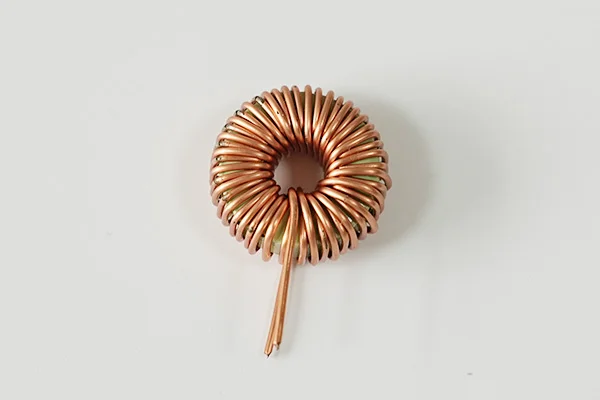
The number of turns is one of the most important parameters affecting the electrical characteristics of coils. For products such as common mode chokes, inductors, and transformers, even a small variation in turn count can influence inductance, impedance, and EMI suppression performance.
The PLC control system of a Fully Automatic Winding Machine accurately counts each winding turn and ensures that every product follows the same production parameters.
Accurate turn control helps manufacturers achieve:
Stable inductance values
Consistent electromagnetic performance
Higher product reliability
Lower rejection rates
One major advantage of modern Automatic Winding Equipment is the ability to store multiple production programs through the PLC control system.
Each program can include important parameters such as:
Wire diameter
Coil dimensions
Number of turns
Winding speed
Wire tension
Starting position
Winding width
Once a production recipe is saved, operators can quickly switch between different coil models without repeating the entire setup process. This improves production flexibility and reduces machine adjustment time.
Even with advanced automation technology, incorrect operation or improper parameter settings can reduce winding quality. The following issues are commonly found during production:
Incorrect wire diameter settings
Unstable tension adjustment
Incorrect starting position
Excessive winding speed
Improper fixture installation
Lack of regular machine calibration
Insufficient maintenance of mechanical components
Establishing standardized setup procedures and regularly checking machine parameters can significantly improve production stability and reduce unnecessary downtime.
Regular maintenance is essential for maintaining long-term machine accuracy and reliability.
Recommended maintenance practices include:
Cleaning wire guides and feeding components regularly
Checking tension control system performance
Inspecting servo motor operation
Verifying sensor accuracy
Updating production parameters when changing products
Performing regular machine calibration
Proper maintenance not only extends equipment lifespan but also helps maintain consistent coil quality during long-term production.
Chikeung's Fully Automatic Coiling Machine is designed for manufacturers requiring high precision, stable production, and reliable automation performance. The machine is specially developed for the manufacturing of common mode chokes, common mode coils, inductors, and other electromagnetic components.
By combining advanced automation technology with precise mechanical control, the system helps manufacturers improve efficiency while maintaining consistent product quality.
Fully automatic wire feeding and winding operation
Automatic wire cutting function
Intelligent PLC control system
7-inch multilingual touch screen interface
Precise servo motor positioning
Stable wire tension control
High-speed winding performance up to 1200 RPM
Support for copper wire, aluminum wire, and tin-plated wire
Flexible production parameter adjustment
Suitable for mass production and customized coil manufacturing
These features make Chikeung's automatic winding solutions suitable for various industries, including power electronics, automotive electronics, telecommunications, renewable energy, and industrial electrical equipment.
Fully Automatic Coiling Machines are widely used in industries that require high-quality electromagnetic components.
The machine provides precise winding control for common mode chokes used in EMI filtering applications. Stable wire arrangement and accurate turn counting help improve electromagnetic performance and product reliability.
Used for manufacturing inductors, transformers, filters, and other components applied in power supplies, converters, UPS systems, and inverter equipment.
Suitable for producing coils used in electric vehicles, charging systems, battery management systems, motor control systems, and automotive sensors.
Provides high-precision winding solutions for communication components, network equipment, and electromagnetic devices.
Supports production of inductive components used in solar inverters, energy storage systems, and other power conversion equipment.
Proper parameter setup is the foundation of achieving consistent coil quality with a Fully Automatic Coiling Machine. By accurately adjusting key settings such as starting position, wire diameter, winding width, tension, speed, and turn count, manufacturers can improve production efficiency while reducing defects.
With intelligent PLC control, servo precision technology, and automatic tension management, modern automatic winding machines provide manufacturers with a reliable solution for high-quality coil production.
For companies producing common mode chokes, inductors, transformers, and other electromagnetic components, investing in a precision Fully Automatic Coiling Machine helps achieve higher productivity, better quality control, and stronger competitiveness in today's demanding manufacturing market.
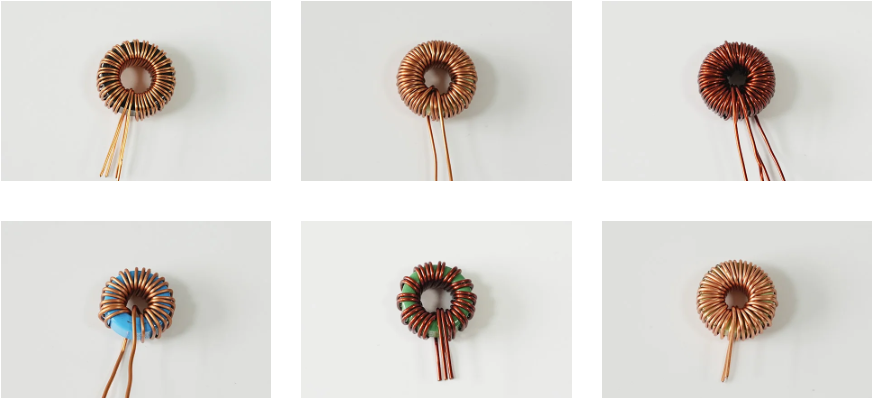
A Fully Automatic Coiling Machine can produce common mode chokes, common mode coils, inductors, transformers, relay coils, motor coils, solenoid coils, sensor coils, and other electromagnetic components.
Stable wire tension ensures uniform winding, prevents wire damage, improves electrical performance, and helps maintain consistent coil quality during mass production.
Yes. Industrial automatic winding machines can support different wire materials, including copper wire, aluminum wire, enameled wire, and tin-plated wire.
The PLC system allows operators to save production parameters, monitor the winding process, quickly switch products, and maintain consistent quality across large production batches.
Yes. The machine can be configured with different winding programs and parameters according to specific coil designs, wire sizes, and production requirements.

Specialised in automated winding equipment and system development, production, sales and technical services as one of the high-tech enterprises.

+0769 82312151
+86 135 8090 8886
+86 132 6737 9998
3F, No.51 Minghua Road, Liangjia Village, Shijie Town, Dongguan City, Guangdong Province, China
Copyright © 2026 Dongguan Zhiqiang Electronic Technology Co., LTD | Privacy Policy | Terms and Conditions
