
2026-10-08 17:57:14
Selecting a toroidal coil winding machine is not about picking the fastest or most expensive platform. It is about matching the machine's tension range, core compatibility, and shuttle design to the specific core material and wire gauge your production line actually uses. A machine that handles 0.3 mm enameled wire on a 20 mm ferrite core is a fundamentally different configuration from one winding 1.5 mm heavy copper on a 120 mm nanocrystalline toroid. This guide walks through the technical decisions that determine whether your machine will hold tolerance or produce scrap.
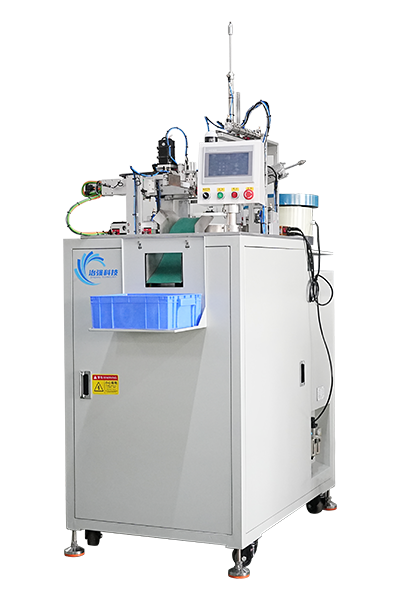
The toroidal core is not a passive component — its material properties directly constrain what the Winding Machine can and cannot do. Different core materials have different brittleness, density, and surface hardness, which means the machine's clamping system, shuttle speed, and guide material must be matched accordingly.
| Core Material | Brittleness | Machine Requirement |
|---|---|---|
| MnZn Ferrite | High — chips under mechanical stress | Pneumatically cushioned fixtures; low clamping force |
| Nanocrystalline | Very high — cracks easily | Custom fixtures; shuttle must not strike core edges |
| Amorphous | High — brittle with sharp edges | Cushioned jaws; reduced shuttle reversal speed |
| Iron Powder | Moderate — denser and tougher | Standard clamping; higher winding force available |
| Fe-Si-Al (Sendust) | Moderate — good pressure tolerance | Standard fixtures; compatible with heavy wire winding |
For brittle cores, the machine's fixture must distribute clamping force evenly across the core's surface area. A toroidal winding machine with pneumatically cushioned fixtures adapts to the core OD automatically, preventing the point-loading that causes chipping and cracking. If your production involves nanocrystalline cores larger than 100 mm OD, always confirm the supplier can provide custom fixtures — standard tooling often does not accommodate these sizes safely.
Wire diameter is the parameter that most directly determines the machine's tension hardware, guide groove depth, and shuttle design. A transformer winding machine configured for 0.4–1.5 mm wire operates in a completely different tension range than one optimized for 0.05–0.3 mm fine wire. The table below maps wire gauge ranges to their machine requirements:
| Wire Range | Tension Range | Guide Type | Typical Application |
|---|---|---|---|
| 0.05–0.3 mm | 0.05–0.5 N | Fine ceramic eyelets; minimal groove depth | Voice coil, precision sensor, RF inductor |
| 0.3–0.8 mm | 0.3–1.2 N | Standard ceramic guides | Common mode choke, signal transformer |
| 0.8–2.0 mm | 1.0–2.5 N | Heavy-duty guides; reinforced shuttle | Differential mode inductor, power choke |
The Chi Keung common mode platform handles 0.4–1.5 mm wire with core OD from 12–40 mm. The differential mode platform extends to 2.0 mm wire with core OD from 9–35 mm. If your production spans both ranges — for example, fine wire signal inductors and heavy gauge power chokes on the same line — you need either two machines or a platform with switchable tension hardware and guide sets.
Not sure which platform matches your wire gauge? Send your wire specification and core drawing — we will confirm machine compatibility and tension settings within 24 hours. Request a compatibility check.
Tension control precision is the specification most often overstated in marketing materials and most often misunderstood by buyers. A toroidal transformer winding machine that claims ±2% tension accuracy only achieves that figure under specific conditions: proper wire gauge match, calibrated tensioners, clean guides, and stable temperature. Here is what matters in practice:
For a transformer coil winding machine producing common mode chokes with 0.4 mm wire, set tension at approximately 0.45–0.65 N. For voice coil winding machine applications using 0.1 mm wire, reduce to 0.15–0.3 N. Always verify the machine's actual tension accuracy with a reference weight during daily startup — drift of more than 5% indicates the tensioner needs recalibration.
An automatic coil winding machine is only cost-effective when its production rate matches your shift output target. Undersize the machine and you create a bottleneck; oversize it and you pay for automation capacity you never use. The key parameters are:
| Configuration | Output (pcs/hour) | Best Fit |
|---|---|---|
| Single station, manual load | ~55 | Low to medium volume, high mix, prototype lines |
| Dual station automatic | ~110 | Growing volume where labor is the constraint |
| Fully automatic with auto loading | 400–600 | High volume, single coil family, multi-shift running |
The single station platform is the cheaper and often better answer when your volume does not exceed 400–500 pieces per shift, your product mix changes frequently, or your coil requires fine wire that benefits from close operator attention. Above that threshold, a dual-spindle electric coil winding machine doubles output without doubling floor space or operator count, making it the typical price-performance inflection point.
For a deeper comparison of platform classes and their cost implications, see our guide on coil winding machine price drivers.
Before committing to a toroidal core winding machine, verify these items with the supplier — each one is a common source of post-purchase disappointment:
Want a sample winding test on your cores? Send your core samples and wire specification — our engineering team will run a trial and provide video evidence of winding quality and cycle time. Request a trial run.
The Chi Keung common mode winding machine handles core OD from 12–40 mm with wire diameter from 0.4–1.5 mm. The differential mode platform handles core OD from 9–35 mm with wire up to 2.0 mm. For nanocrystalline cores up to 150 mm OD, custom fixtures are available — always confirm compatibility before ordering.
If your shift output is below 400–500 pieces and your product mix changes frequently, a single station platform at approximately 55 pieces per hour is the better choice. If your volume exceeds that threshold and you are running a stable product mix, a dual station at approximately 110 pieces per hour doubles output without doubling the operator count.
For 0.4 mm enameled copper wire on a common mode choke, set tension at approximately 0.45–0.65 N. For 0.1 mm fine wire, reduce to 0.15–0.3 N. For 1.5–2.0 mm heavy gauge wire, increase to 1.0–2.5 N. Always verify with a reference weight at daily startup and recalibrate if drift exceeds 5%.
Yes, but the machine must be equipped with interchangeable fixtures. Ferrite cores require standard pneumatically cushioned clamping. Nanocrystalline cores require custom fixtures with reduced clamping force and modified shuttle clearance to prevent edge contact. Confirm with the supplier that both fixture sets are available before ordering.
Standard lead time is approximately 15 days. Custom fixtures, trial winding rounds, or unusual specifications may extend the timeline. The delivery date is confirmed on the quotation, so include it in your production planning.
Choosing a toroidal Coil Winding Machine comes down to three decisions: match the core material to the fixture system, match the wire gauge to the tension hardware, and match the production capacity to your shift output. Get these three alignments right and the machine will hold tolerance batch after batch. Get any one wrong and you will spend the machine's life compensating for a platform that was never configured for your coil in the first place. If you need help evaluating which configuration matches your production requirements, contact Chi Keung with your core drawing and wire specification — we will recommend the right platform and provide a trial winding analysis within 24 hours.

Specialised in automated winding equipment and system development, production, sales and technical services as one of the high-tech enterprises.

+0769 82312151
+86 135 8090 8886
+86 132 6737 9998
3F, No.51 Minghua Road, Liangjia Village, Shijie Town, Dongguan City, Guangdong Province, China
Copyright © 2026 Dongguan Zhiqiang Electronic Technology Co., LTD | Privacy Policy | Terms and Conditions
