

2026-11-06 10:30:39
Toroidal coils are used in electrical and electronic devices for energy transfer, current filtering, voltage conversion, and electromagnetic interference (EMI) suppression. They are made by winding insulated copper wire around a ring-shaped magnetic core, allowing them to generate and manage magnetic fields within electrical circuits.
Because of their compact structure and relatively low magnetic leakage, toroidal coils are commonly used in power supplies, audio equipment, industrial control systems, inverters, and electronic filtering circuits.
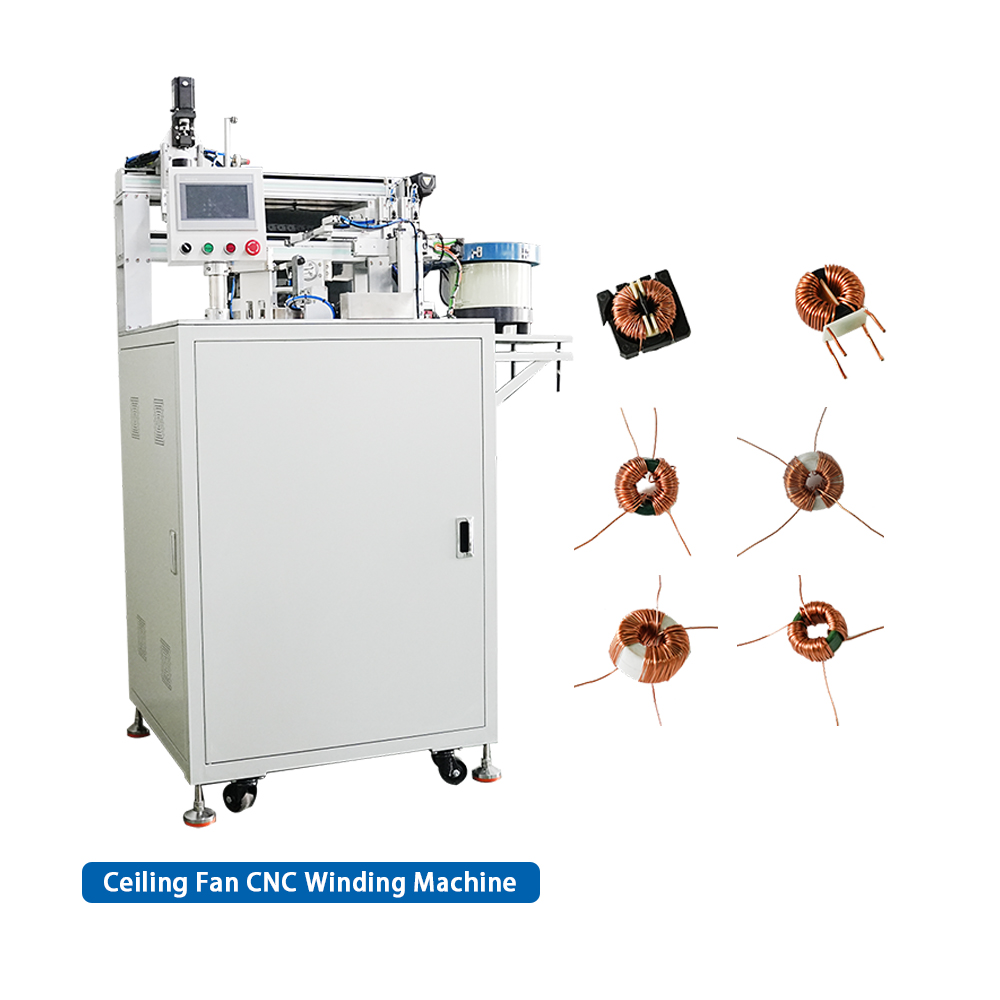
Toroidal coils serve different functions depending on their core material, winding design, and electrical specifications.
1. Power Supply and Voltage Conversion
Toroidal transformers are widely used in power supply systems to convert AC voltage from one level to another. They are commonly found in audio amplifiers, laboratory equipment, and industrial power supplies.
For example, an audio amplifier may use a toroidal transformer to step down the incoming mains voltage before rectification and voltage regulation.
2. EMI and Noise Filtering
Toroidal cores are frequently used in common-mode chokes to reduce unwanted electrical noise in power and signal lines.
Their magnetic structure helps suppress common-mode interference, making them useful in switching power supplies, communication equipment, and electronic control systems.
3. Industrial Equipment and Motor Systems
Toroidal inductors can be used in industrial power conversion equipment, motor drives, and control circuits. They help manage current changes, filter electrical signals, and support stable circuit operation.
For example, an inverter may use inductive components to smooth current ripple and reduce unwanted electrical disturbances.
4. Audio and Electronic Equipment
Toroidal transformers are often selected for audio equipment because their relatively low stray magnetic fields can help reduce unwanted hum in nearby sensitive circuits.
They are also used in some amplifiers and professional audio systems where compact installation and power handling are important.
The ring-shaped design provides several characteristics that make toroidal coils suitable for different applications.
1. Lower Magnetic Leakage
The closed magnetic path helps contain magnetic flux within the core, generally reducing stray magnetic fields compared with many conventional open-core designs.
2. Compact Structure
Toroidal coils can provide the required electrical characteristics in a relatively compact structure, making them useful in equipment with limited installation space.
3. Good Magnetic Coupling
The continuous core structure supports effective magnetic coupling between windings. This is particularly useful in transformer applications where energy needs to be transferred between primary and secondary windings.
4. Flexible Customization
Manufacturers can adjust core materials, wire sizes, winding turns, and dimensions to meet different electrical requirements.
Although the terms are sometimes used interchangeably, they do not refer to exactly the same component.
A toroidal coil is a general term for insulated wire wound around a ring-shaped core. It can function as an inductor, choke, or part of a transformer.
A toroidal transformer specifically contains primary and secondary windings designed to transfer electrical energy through electromagnetic induction and convert voltage levels.
For example, a toroidal inductor in a power supply may help filter current ripple, while a toroidal transformer converts incoming AC voltage into a different AC voltage.
The main difference is their intended electrical function and winding configuration.
The performance of a toroidal coil depends on several electrical and manufacturing parameters.
Core material: Ferrite, silicon steel, and other magnetic materials have different permeability, saturation characteristics, and frequency ranges.
Number of turns: The winding turns affect inductance and transformer voltage ratios, depending on the component design.
Wire diameter: Wire size influences winding resistance, current capacity, and heat generation.
Operating frequency: The selected core material must match the intended frequency range to control magnetic losses.
Temperature: Excessive temperature can affect insulation performance and component reliability.
For example, a coil designed for a 50 Hz or 60 Hz power application may require a different core material and winding configuration from a high-frequency switching power supply component.
Custom toroidal coil manufacturing generally involves four main stages.
1. Core Selection
The manufacturer selects the core material and dimensions according to the required inductance, operating frequency, and electrical characteristics.
2. Copper Wire Winding
Insulated copper wire is wound around the core. The number of turns, wire diameter, and winding arrangement are determined by the design specifications.
3. Insulation and Assembly
Insulation materials are applied where necessary to meet electrical isolation, protection, and installation requirements.
4. Electrical Testing
Finished components may undergo inductance, DC resistance, insulation resistance, dielectric withstand, and other application-specific tests.
For example, a custom toroidal inductor for an industrial power supply may require a specified inductance and current rating. Testing helps verify whether the finished component meets the design requirements.
Toroidal coils are used in power conversion, EMI filtering, audio equipment, industrial electronics, and various electrical control systems. Their closed magnetic structure, compact design, and flexible winding configurations make them suitable for a wide range of applications.
When selecting toroidal coils, manufacturers and engineers should consider core material, inductance, winding specifications, current requirements, and operating frequency to ensure the component matches the intended application.

Specialised in automated winding equipment and system development, production, sales and technical services as one of the high-tech enterprises.

+0769 82312151
+86 135 8090 8886
+86 132 6737 9998
3F, No.51 Minghua Road, Liangjia Village, Shijie Town, Dongguan City, Guangdong Province, China
Copyright © 2026 Dongguan Zhiqiang Electronic Technology Co., LTD | Privacy Policy | Terms and Conditions
