
2026-01-22 09:42:01
In the wire and cable, motor manufacturing, home appliance, and industrial automation industries, winding is a fundamental yet critical process. However, many people often ask: what is a cable winding machine called? What is the difference between a cable winding machine, a Coil Winding Machine, and a motor winding machine? Are they all considered a winding machine?
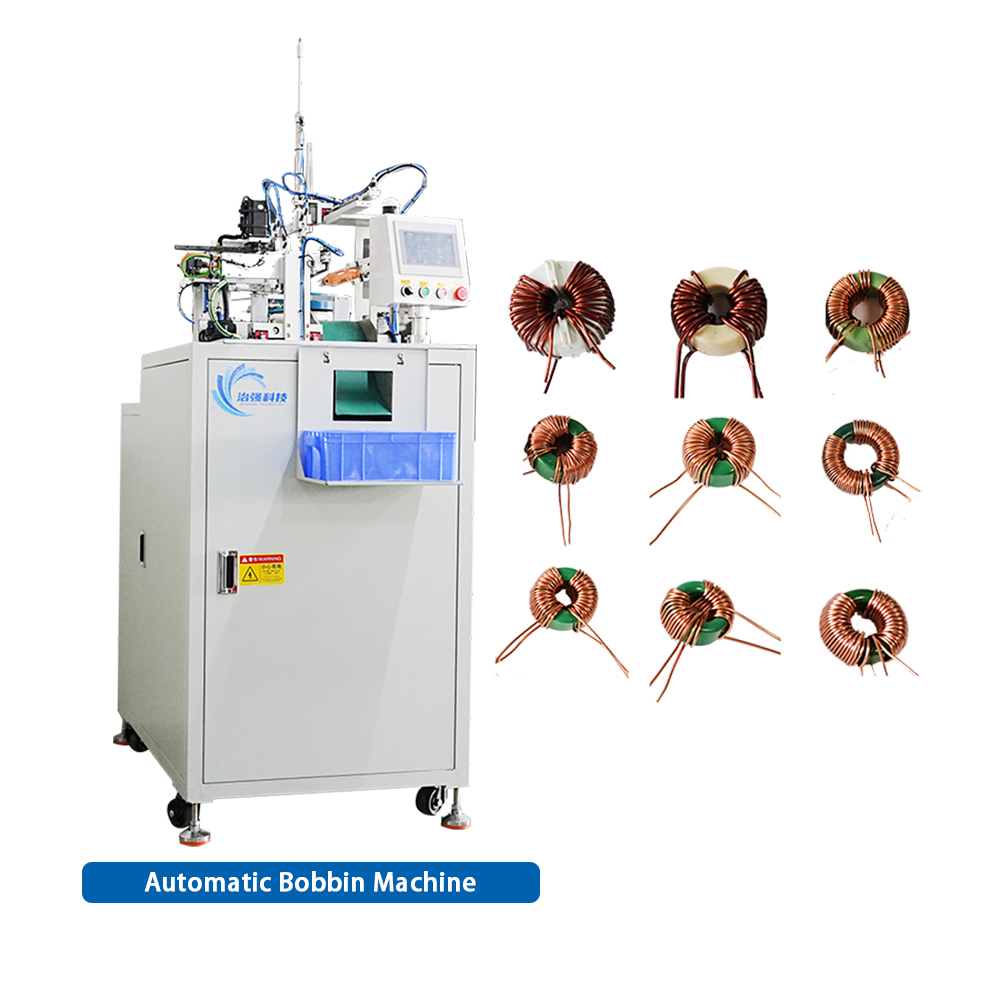
In a broad sense, a winding machine is equipment used to wind wire, cable, enameled copper wire, or other flexible conductors onto spools, coils, cores, or motor stators in a controlled manner.
Depending on the application, winding machines are used for:
Cable coiling and take-up
Coil and inductor winding
Motor winding and stator production
From this perspective, a cable winding machine is also a type of electric winding machine, but designed for a different purpose than precision coil winding.
In practice, a cable winding machine can be referred to by several different names, depending on its function and level of automation:
Cable Winding Machine / Cable Coiling Machine
Emphasizes cable take-up and coiling
Commonly used for finished cable packaging
Winding Machine (Generic Term)
A broad category covering many winding applications
Includes cable, coil, and motor winding machines
High level of automation
Used for cable winding as well as coil and motor applications
Spindle Winding Machine
Uses a rotating spindle for winding
More commonly applied to coils rather than long cables
So, when asking what is a cable winding machine called, the correct answer depends on the application:
For cable take-up and coiling, it is typically called a cable winding machine or automatic winding machine
For functional electrical windings, it is classified as a coil winding machine
Many users confuse cable winding machines with coil winding machines, but they serve different purposes.
Primary function: cable take-up, coiling, and bundling
Winding material: power cables, communication cables, flexible wires
Key focus: speed, tension control, and neat winding
Primary function: winding coils for inductors, transformers, and motors
Winding material: enameled copper wire
Key focus: turn count accuracy and electrical performance
This is why how to use a coil winding machine emphasizes turn counting and layering rather than cable length control.
A spindle winding machine is one of the most traditional winding solutions:
Simple mechanical structure
Cost-effective
Suitable for standard coils and small-scale production
An automatic winding machine uses programmable controls to achieve:
Automatic turn counting
Automatic wire guiding
Automatic stop and restart
These machines dominate modern production lines due to their high efficiency and consistency.
A motor winding machine automatic is specifically designed for motor stators:
Supports multi-slot and multi-phase winding
High synchronization accuracy
In the motor industry, this category is often referred to as an all motor winding machine.
A ceiling fan coil winding machine is optimized for ceiling fan motors:
Handles thick wire diameters
Designed for high-power windings
Stable tension control
Brands such as AME ceiling fan winding machine are widely recognized in emerging markets.
A toroidal core winding machine is used for:
Toroidal transformers
Toroidal inductors
It uses a rotating shuttle to wind wire around a closed magnetic core, which is very different from standard cable winding.
An electric winding machine is a general term referring to winding machines powered by electric motors, covering cable, coil, and motor winding applications.
Although designs vary, the basic steps for how to use a coil winding machine are similar:
Set winding parameters
Number of turns
Speed
Wire tension
Mount the bobbin or core
Thread the wire and adjust the guide
Start the winding process
Stop automatically and inspect quality
This process differs from a cable winding machine, which focuses more on cable length and coiling consistency.
AME winding machine is a well-known name in the winding equipment industry, offering solutions for:
Motor winding
Ceiling fan winding
Semi-automatic and fully automatic systems
The AME ceiling fan winding machine, in particular, is widely used in home appliance manufacturing.
When selecting the right equipment, consider:
Winding material: cable or coil
Level of automation required
Precision and quality requirements
Production volume
Compatibility with existing winding machine systems
For cable take-up and packaging, a cable winding machine is sufficient.
For electrical performance-critical components, a dedicated coil winding machine or motor winding machine automatic is essential.
Returning to the original question—what is a cable winding machine called?—the answer depends on its purpose:
Cable coiling and take-up → Cable Winding Machine / Automatic Winding Machine
Functional coil winding → Coil Winding Machine / Spindle Winding Machine
Motor stator winding → Motor Winding Machine Automatic / All Motor Winding Machine
Understanding what is a winding machine and how different winding machines are classified helps manufacturers select the right equipment, improve productivity, and reduce production costs. In modern manufacturing, from cables to motors and from manual to fully automated systems, the electric winding machine remains an essential piece of industrial equipment.

Specialised in automated winding equipment and system development, production, sales and technical services as one of the high-tech enterprises.
+0769 82312151
+86 135 8090 8886
+86 132 6737 9998
3F, No.51 Minghua Road, Liangjia Village, Shijie Town, Dongguan City, Guangdong Province, China

Copyright © 2026 Dongguan Zhiqiang Electronic Technology Co., LTD | Privacy Policy | Terms and Conditions